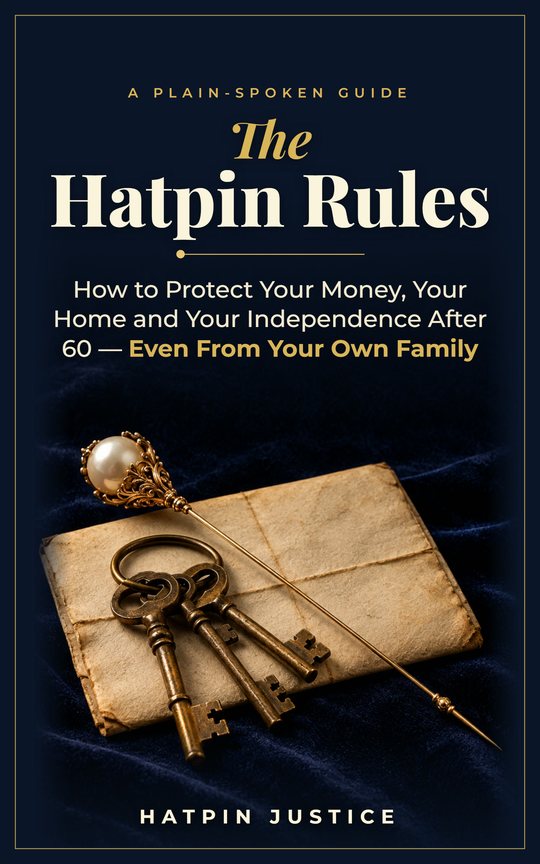
How to protect your money, your home and your independence after 60 — even from your own family. Know which papers never to sign, who can touch your accounts, and exactly what to do if someone you love comes after what's yours.
Most money stolen from older Americans isn't taken by strangers in hoodies. It's taken by someone with a key: a son with a power of attorney, a niece on the joint account, a daughter-in-law with a "simple form" to sign. It starts with a small ask, and it happens in good families.
The Hatpin Rules is the calm, practical version of what the women in the Hatpin Justice stories always know. Which papers can hand away your house. What a power of attorney really lets someone do, and how to limit it. How a guardianship petition works and how to keep one from ever being filed. How to make your bank a guard dog. How to say no and still have Sunday dinner. And, if it has already happened, what to do in the first 72 hours.
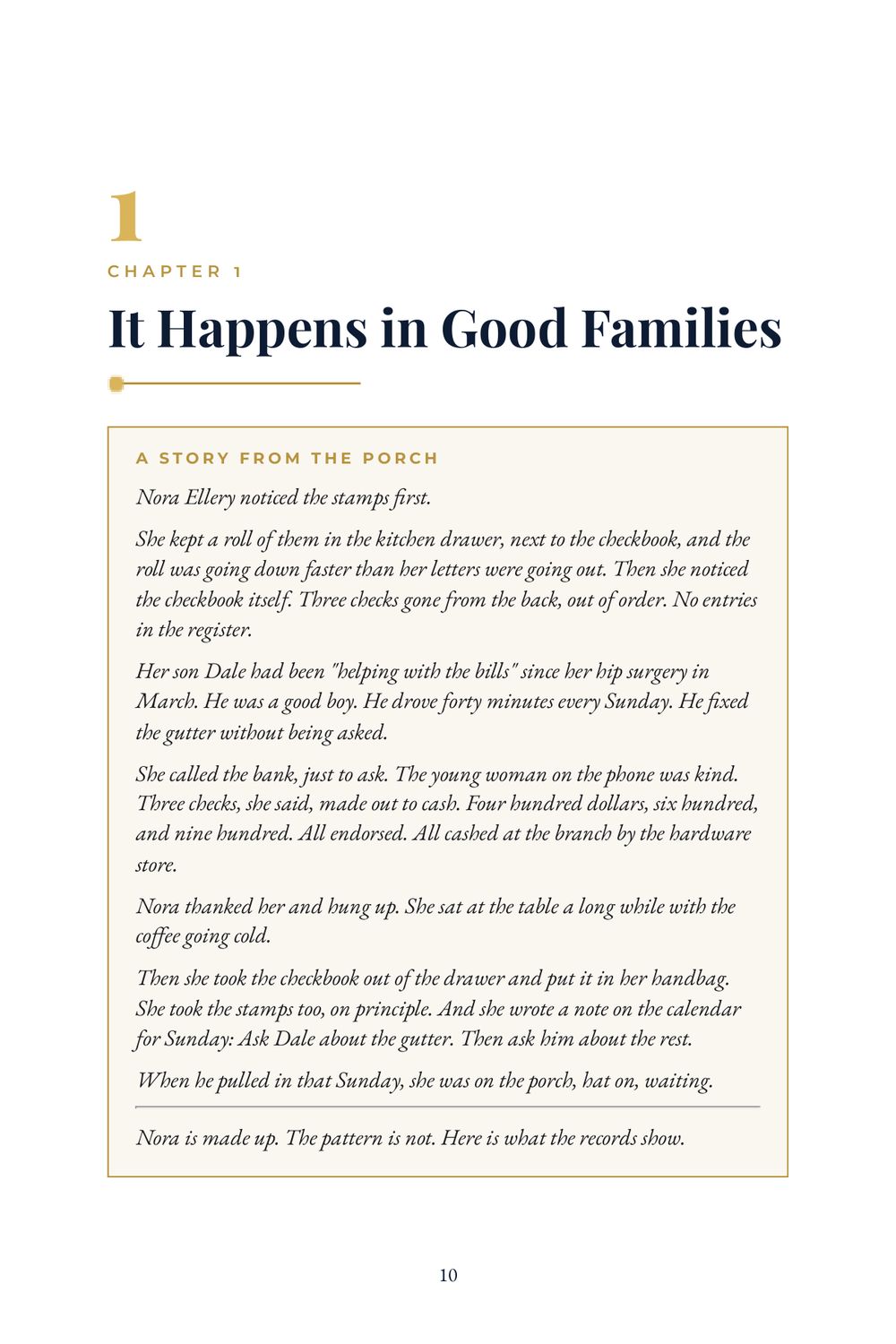
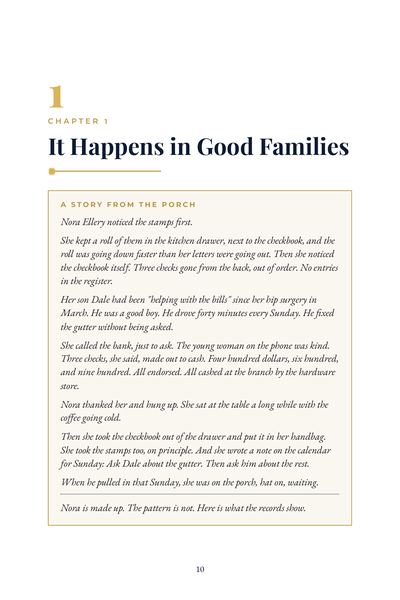
Every chapter opens with a short story from the porch — made up, but it happens every day — and then gives you the real rules, checked against government and legal sources and listed at the back.
Who wrote it? The people behind Hatpin Justice, a YouTube channel of stories about older people standing up to relatives who come after their money. The stories are made up; this book is the real, practical side of them, researched from government, court and legal-aid sources and written for you, not for lawyers.
What the book is, how to use it, the illustrative-stories note, why this happens in good families.
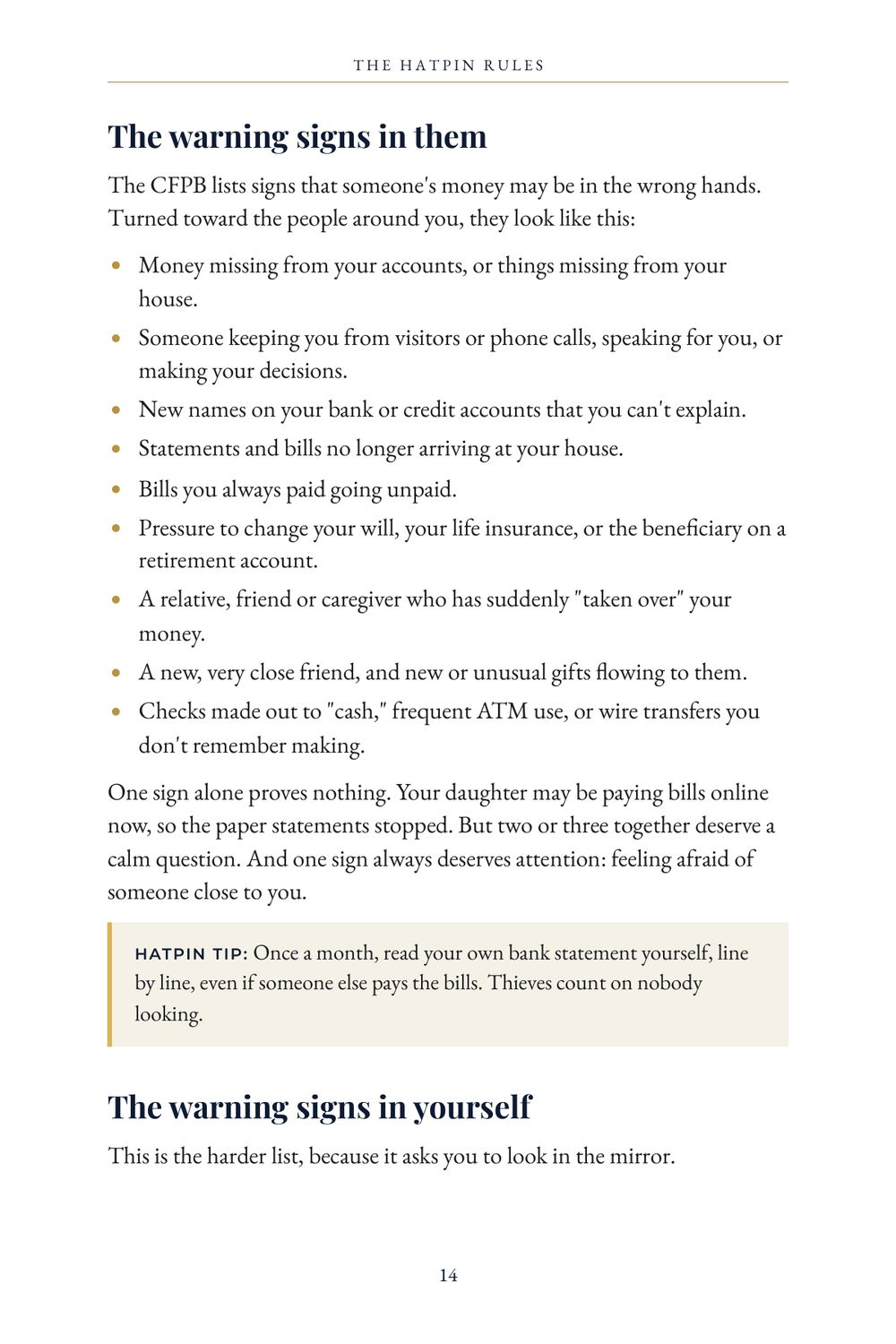
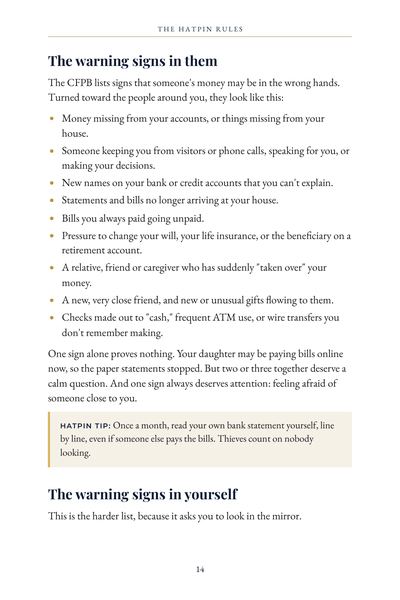
What elder financial exploitation is, how common it is (real figures), why the person is so often a relative, the warning signs in them and in yourself.
How pressure starts (guilt, urgency, "it's only a loan", isolation), how to say no and keep the relationship; word-for-word scripts.
Signature traps: deeds hidden in stacks, quitclaim deeds, "just a formality", notaries; deed fraud and county property-fraud alerts; a before-I-sign routine.
Durable vs springing vs limited, choosing an agent, limits and co-agents, record-keeping, how to revoke one.
Health-care proxy, living will, HIPAA release, why it needn't be the same person as your money agent.
Wills, revocable living trusts, successor trustees, beneficiary designations and TOD/POD, updating after a death, divorce or falling-out; why a will can't override a beneficiary form.
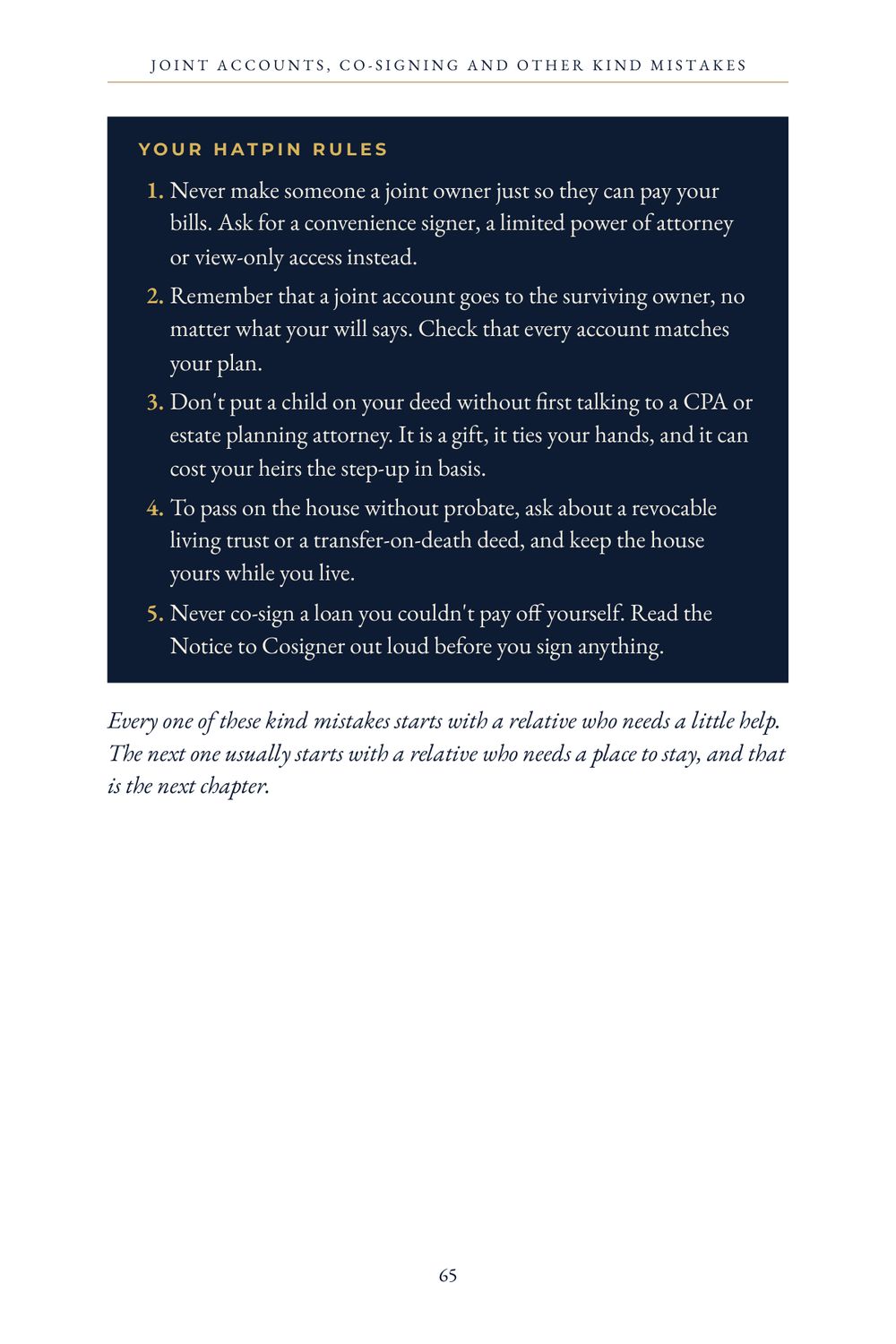
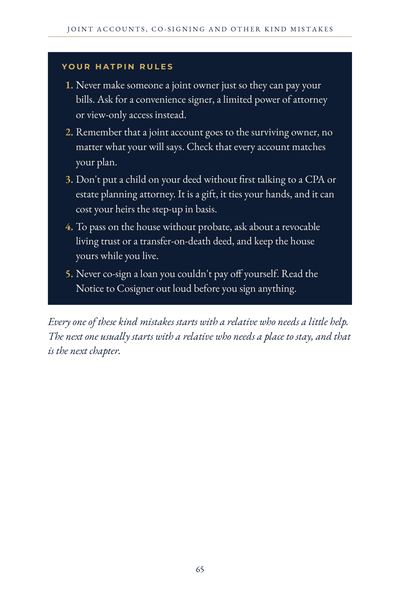
Joint owner vs convenience signer, adding a child to the deed (gift tax, their creditors and divorce, the lost step-up in basis), co-signing.
Family moving in, a written house agreement, why removing a relative can require a formal eviction, reverse-mortgage pressure, title fraud.
Trusted contact person, alerts, credit freezes, my Social Security account, representative payees, passwords and digital accounts.
Loans in writing (and IRS interest rules), the annual gift exclusion, written caregiver agreements, the Medicaid five-year look-back.
Grandparent and emergency scams, AI voice cloning, a family safe word, romance and impostor scams, who will never call you.
What guardianship/conservatorship is, how a petition works, your rights in court, how advance documents prevent it, alternatives such as supported decision-making.
What APS is and does, how a false report can be used as a weapon, how to answer a visit calmly, when to call them yourself.
Notes, logs, copies, a safe place; one-party vs all-party consent recording laws; what evidence actually helps.
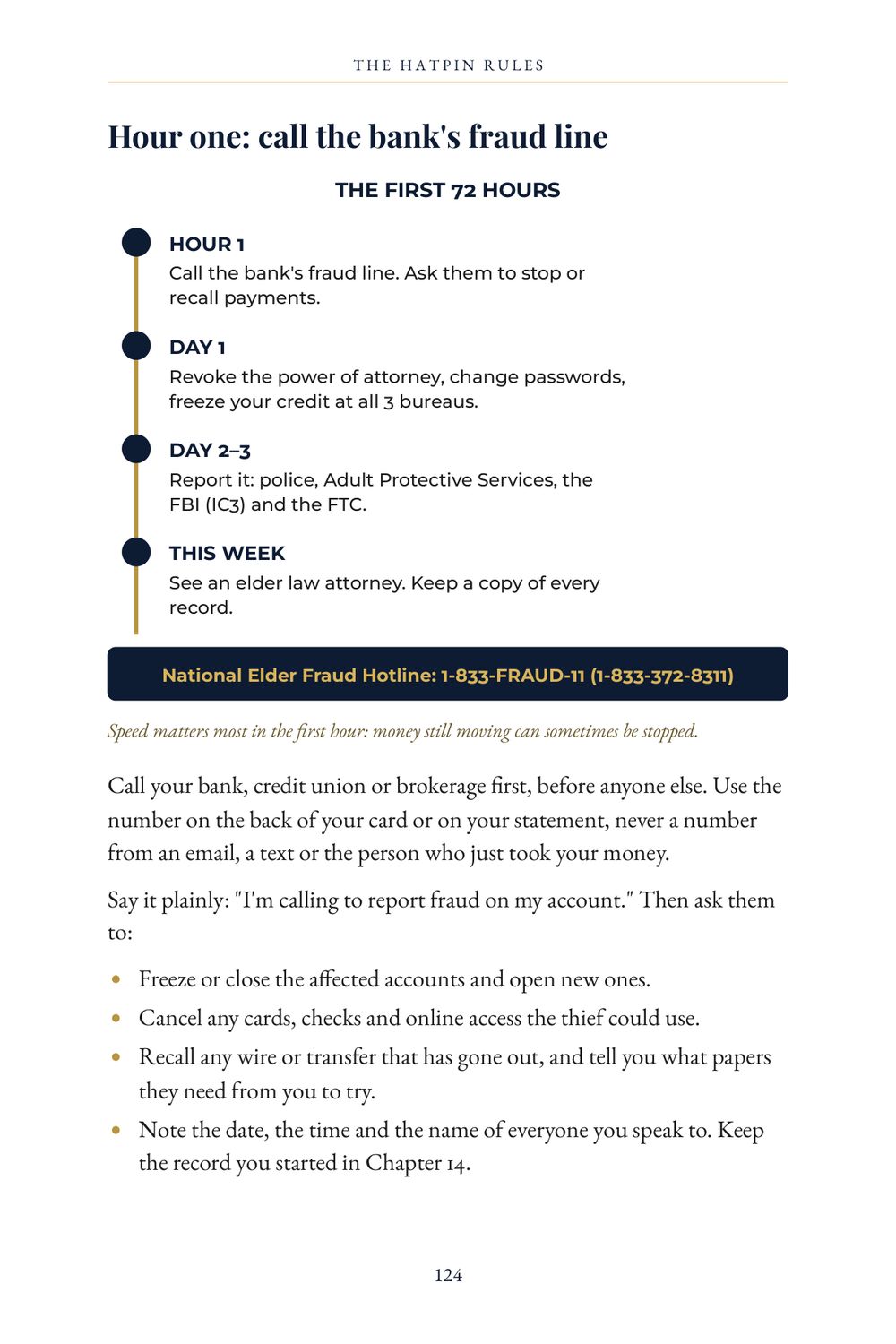
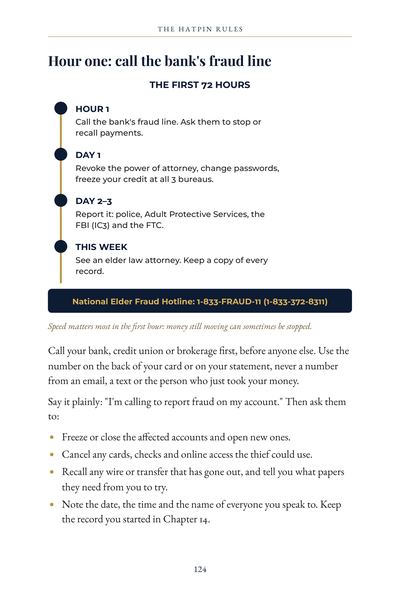
The first 72 hours: bank, credit bureaus, police report, APS, attorney; reporting lines; what recovery can look like.
Elder law attorneys (NAELA), legal aid, fiduciary financial planners, CPAs; what it costs; questions to ask; red flags in "helpers".
Keeping family while keeping boundaries: the family meeting, telling them what you've done, forgiveness without access.
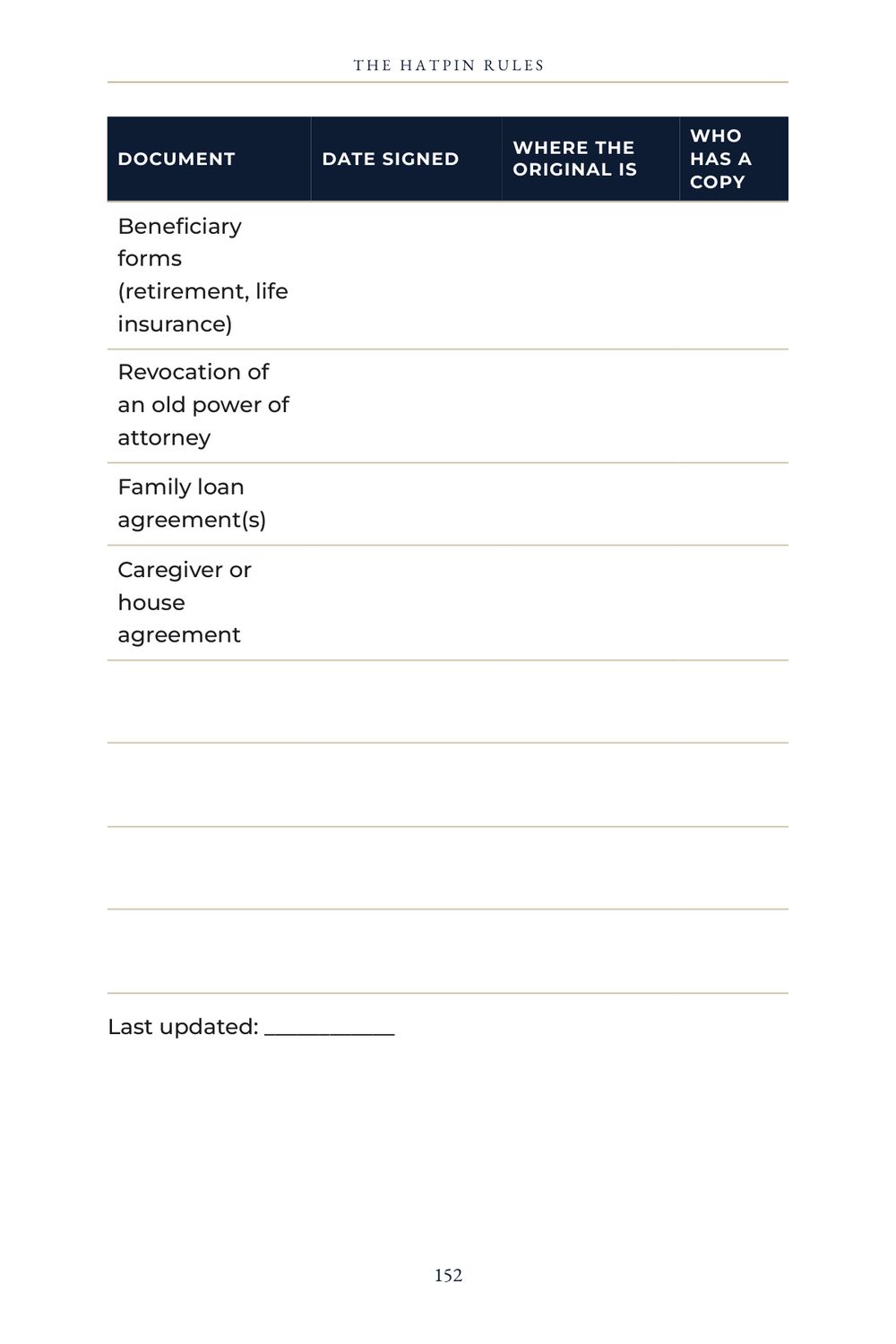
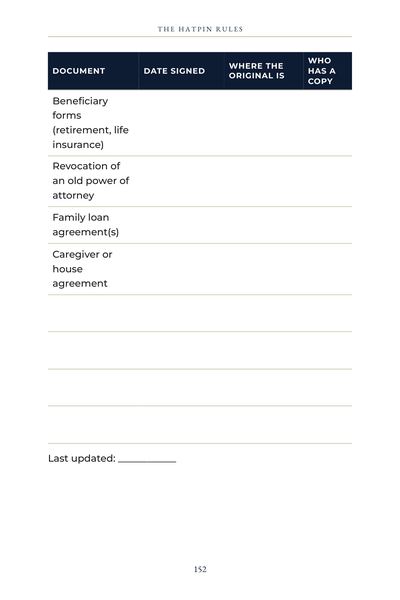
Large-print pages to print and fill in: Before I Sign, Red Flags, My Documents Inventory, Who Can Touch What, My Trusted People, a family loan outline, The First 72 Hours and a phone card for pushy callers.
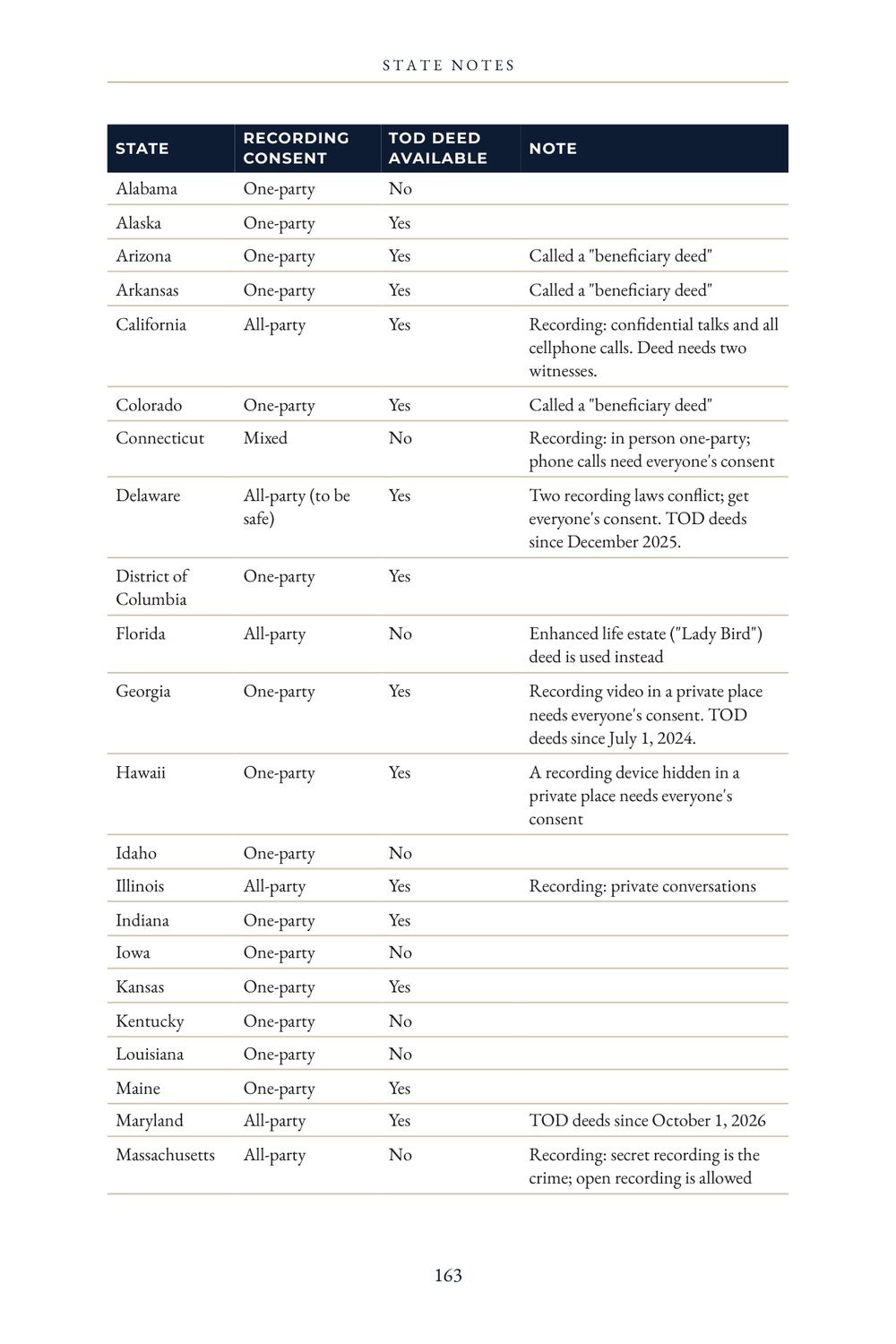
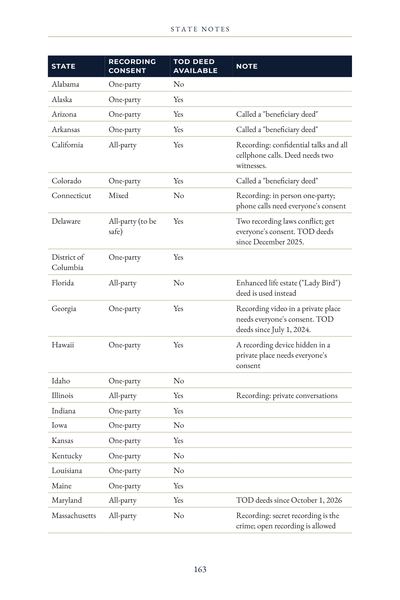
A table of every state: recording-consent rules and whether transfer-on-death deeds are allowed.
Every legal and banking word in the book, in plain English.
The national help lines and websites in one place: Eldercare Locator, Adult Protective Services, NAELA, CFPB, FTC, IC3, the credit bureaus and Social Security.
Real pages from the book. Tap one to see it large.
A PDF file. It opens on any phone, tablet or computer, and you can send it to the Kindle app with Amazon's Send to Kindle. The worksheets print well on ordinary letter paper.
220 pages: 17 chapters of about 2,000 words each, the worksheets, state notes, a glossary, a resource directory and the list of sources. You can read it in a few evenings, and each chapter stands on its own.
The videos are stories. The book is the practical part: what each paper does, what to sign and what never to sign, the exact words to say, the phone numbers to call, and checklists you can fill in. Facts are checked against government and legal sources, all 354 listed at the back.
No. It's general information for readers in the United States, and laws differ by state. It tells you plainly where you need an elder law attorney, a CPA or your bank, and how to find a good one without overpaying.
Click any "Get the book" button. Gumroad's secure checkout opens over this page; pay by card or PayPal, and the download link appears at once and is emailed to you.
No. The short "Stories from the Porch" are made up, with invented names, to show how each danger looks in real life. Everything else is drawn from the government and legal sources listed at the back.
Small, elegant, and sharp when it has to be.
The Hatpin Rules · 220-page PDF · instant download